
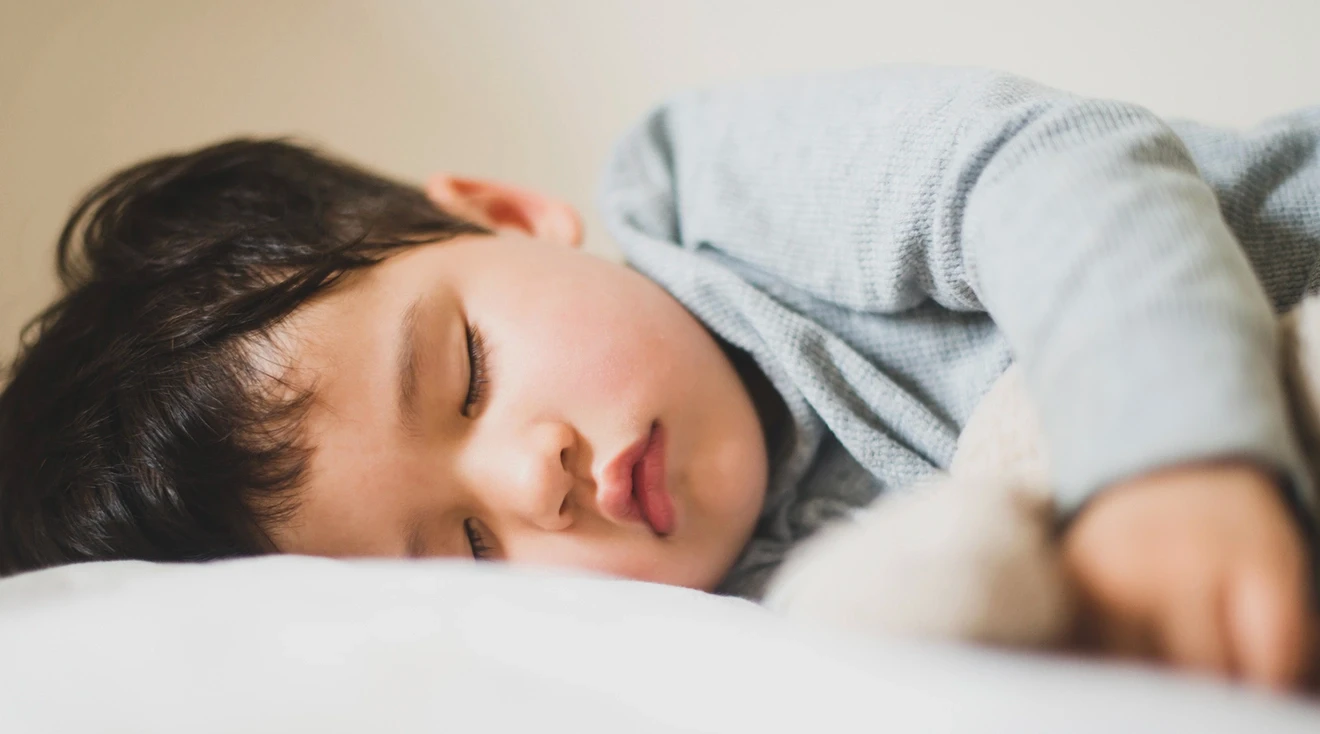
"Sufficient sleep is crucial for a child's healthy development and behavior," says Dr. Eboni Hollier, a Houston-based pediatrician, MD, FAAP. "Children who don't get enough quality sleep face greater challenges in regulating their behavior." Lack of sleep can lead to moodiness, increased tantrums, and aggressive behavior. Furthermore, growth hormone is primarily secreted during deep sleep. Adequate sleep is essential for a child's healthy growth. Deep sleep is especially important for infants and toddlers. This time is crucial for brain development and physical growth.
We believe all parents understand how vital sleep is for their children. But it can be frustrating when your little one, engrossed in games, TV, or toys, refuses to settle down!
Want to learn more about toddler sleeping? Keep reading for expert tips on how to get a toddler to sleep. Learn what to do when your toddler won't sleep. Discover how bamboo pajamas for toddlers can help.
How Much Sleep Does a Toddler Need?
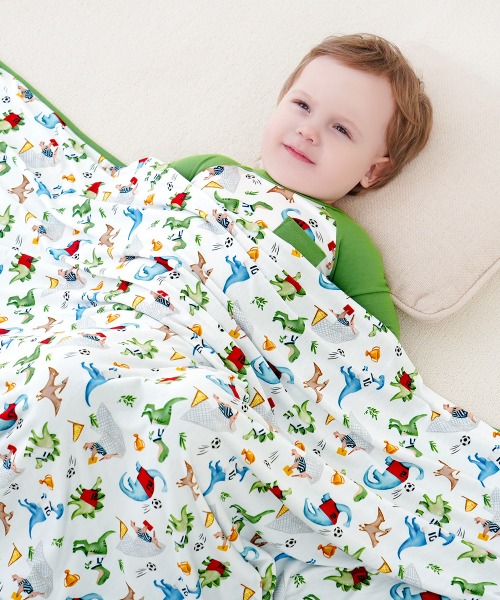
On average, children between 12 and 36 months need 12 to 14 hours of sleep each day. This usually includes about 11 hours of sleep at night. They also take a nap that lasts 1 to 3 hours during the day. If daytime sleep is shorter or skipped, they may need longer nighttime sleep to compensate."
Hollier adds that as children grow, their sleep consolidates. "During the first three years, daytime sleep decreases a lot. This is because toddlers usually sleep more deeply at night than infants. Their organs and nervous systems are maturing." So, what's the expert-recommended sleep duration?
How Much Sleep Does a 1-Year-Old Need?
According to the American Academy of Sleep Medicine (AASM), 1-year-olds typically need 11-14 hours of sleep per day, including naps. This time is a great period for brain development. Sleep, especially deep sleep and REM sleep, is important. It helps strengthen neural connections, memory, and learning skills.
How Much Sleep Does a 2-Year-Old Need?
The AASM notes that 2-year-olds also need 11-14 hours of sleep. However, individual variations become more apparent at this stage. Some toddlers may need slightly less sleep, so parents should watch for tiredness cues like yawning or frequent blinking.
How Much Sleep Does a Preschooler Need?
Even as preschoolers, the AASM recommends 10-13 hours of sleep per day. Children at this age are often very active, so a 1-2 hour nap is advisable. Avoid naps longer than 2 hours or after 4 PM, as they can make bedtime difficult.
Does a Toddler Need a Nap?
While naptime can be tricky, experts still recommend a daily 1-2 hour nap between 11 AM and 2 PM.
What If Your Toddler Won't Sleep?
Experts say it's normal for toddlers to resist sleep. "Sometimes, sleep resistance means your toddler has better things to do than doze!" If your child refuses to sleep, try these methods:
-
Ensure They're Actually Tired. Sometimes parents are so focused on the schedule that they forget their child might not be tired enough. Make sure kids get enough sensory stimulation every day. This includes outdoor play and exercise to help them feel truly tired.
-
Spend Quality Time Together. "I recommend setting aside time to be with your child before naptime—playing, reading books, etc." Your child might be experiencing separation anxiety and be reluctant to waste precious time with you on sleep.
-
Get Moving. Claire Fair is a certified sleep consultant for infants and toddlers. She owns The Gentle Sleep Coach in Sydney. She suggests taking a stroller ride or a car ride. The motion may help your child fall asleep peacefully.
-
Don't Over-Focus on the Schedule. Remember, children are individuals with their own minds and attitudes. As parents, we're learning the habits of these amazing little beings. Embrace the journey!
When Do Toddlers Stop Napping?
According to Shepard-Ohta, most toddlers are ready to stop napping between ages 3 and 4.5. If your child starts waking in the middle of the night or too early in the morning, it might be time to shorten or drop the nap.
How to Get a Toddler to Sleep?
We understand that parenting is demanding. The time after your child falls asleep might be your only free, personal time. Try these methods to help your toddler fall asleep faster:
-
Offer Plenty of connections. Spend quality time before bed—building blocks, watching a calm show, or reading together. This provides security, so they aren't afraid of the dark after closing their eyes. Avoid vigorous activities like running right before bed.
-
Slow Down the Bedtime Routine. Don't expect your child to fall asleep in 10 minutes. Start winding down an hour earlier: dim the lights, reduce noise, and create a calm, cozy atmosphere.
-
Ensure Adequate Sleep Pressure. Establish a clear rule or "pressure" that it's time for sleep. Making bedtime a consistent, ritualistic event can help.
-
Increase Sensory Input. Fair notes that if your child is bouncing before bed, they might be seeking sensory input. Try some rough-and-tumble play to help them burn off that excess energy earlier in the evening.
-
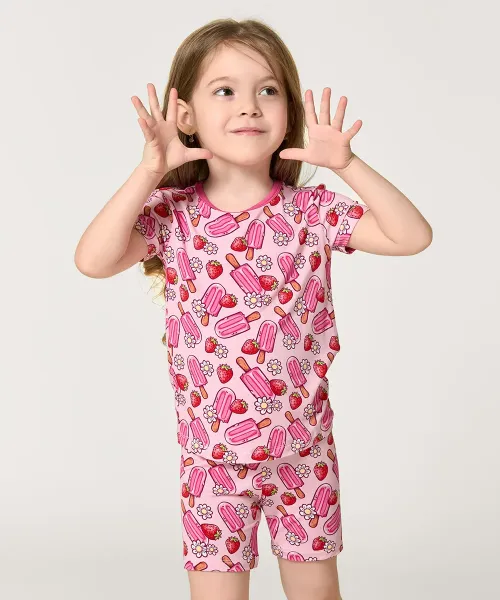
Enhance the Sleep Environment. A warm, clean room, soft pajamas, and a favorite stuffed animal or lovey reinforce that it's time for sleep. Bamboo pajamas for toddlers are highly recommended. Changing into their favorite printed pajamas an hour before bed can subconsciously signal that sleep time is coming.
Why Can Bamboo Pajamas Help Your Toddler Sleep?
-
Ultimate Softness & Smoothness – Like a Second Skin. Bamboo fibers are very fine. This makes a fabric that is soft and smooth. It is often called the "breathing ecological fiber." Its smoothness rivals silk or high-quality Tencel. This softness minimizes friction against your toddler's delicate skin, which is especially important for those with eczema or sensitivities.
-
Excellent Temperature Regulation – Not Too Hot, Not Too Cold. Bamboo is highly breathable and moisture-wicking. It quickly absorbs and evaporates sweat and moisture from your child's skin. Think of bamboo pajamas as your little helper for overnight comfort. They feel cool in summer and comfortably warm in winter.
-
Hypoallergenic – A Boon for Kids with Allergies or Stuffy Noses. The smooth, round surface of bamboo fibers makes it harder for allergens like dust and mites to cling to the fabric. For children with allergies or stuffy noses, this can reduce irritation. It helps keep airways clear and improves sleep quality.
-
Natural Antibacterial Properties – Healthier and More Hygienic. Bamboo contains natural antibacterial substances that help it resist pests during growth. This feature is partly kept in the finished fabric. This means it stays fresh longer. However, you still need to wash the pajamas, of course!
Consion
We recommend that toddlers aim for around 10 hours of quality sleep each night. It's important to have a routine and avoid going to bed late. You should also take 1–2 hours for a nap during the day. Of course, every child is unique, and there's no one-size-fits-all standard when it comes to sleep. If your little one resists bedtime, it may simply be a sign of abundant energy.
Try to spend more quality time with them during the day. Play together, explore outside, and help them use their energy. A calm and cozy bedroom, along with soft bamboo pajamas, can help create a soothing bedtime routine. This makes it easier to fall asleep.
Parenting is no easy journey—but you're doing an amazing job. Let Easweet support you in raising your little one with more science, less stress. Together, we can help give your child an easy and sweet childhood.